Commercial Solar Installation in Orlando, FL

Solar Installers Orlando connects business owners with local contractors who design and install commercial solar systems. A contractor from our network can assess your property for rooftop panels, a ground-mounted array, or a solar carport.

Commercial Solar Installation Options

Your AC, refrigeration or equipment can run for most of the workday, and the electric bill adds up. A commercial solar system can cover part of that daytime use. A contractor from our network reviews when you use power and where panels could fit, then estimates how much electricity the system could produce and what installation would mean for parking, deliveries and business hours.

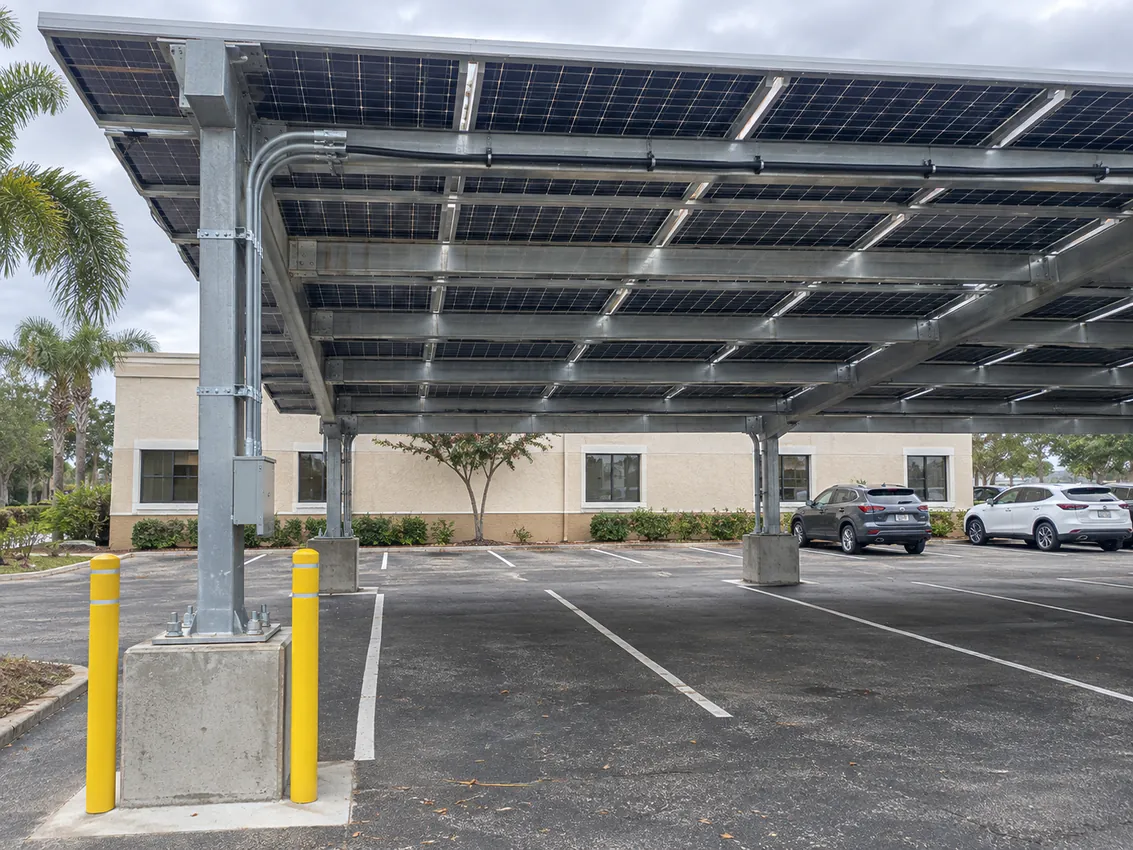
Steel solar carport over a commercial parking lot with protective bollards
Carport design has to account for parking and vehicle clearance.

Commercial Roof, Ground-Mount and Carport Layouts

  • Rooftop panels. Check the roof’s condition and capacity, and plan the layout around HVAC units and the space your maintenance team needs.
  • Ground-mounted solar. Check where the foundations can go and how the electrical run will reach your building.
  • Solar carports. Use parking space for power and shade. Check vehicle clearance and how many spaces would close at a time during construction.

Commercial Battery Storage

Commercial Battery Backup and Runtime

A battery system designed for backup can keep selected equipment running, such as refrigeration, registers, or network equipment. Tell the contractor what needs to stay on and for how long. They can estimate runtime from the equipment’s power draw and the battery’s usable capacity, and confirm whether your solar panels can recharge it while the grid is down.

Battery Storage for Demand Charges

If your electric rate charges for peak demand, a battery can supply part of your power during those peaks so the building draws less from the grid. Share a year of utility bills and interval usage data if you have it. Ask the contractor to compare your estimated demand charges with and without storage using the rate on your bill.
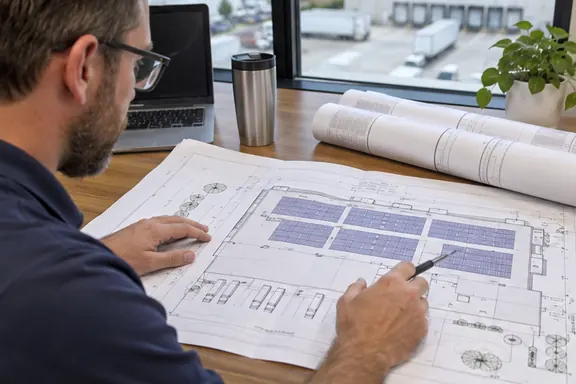
Commercial Solar Site Assessment

Start with your business address, a recent electric bill and your operating hours. If some areas need to stay open, such as a loading dock or a customer entrance, include that in your request so the contractor can account for it early.

Engineering, Commissioning and Monitoring

This guide shows a typical process. The steps, scope, and timing can vary by project and by the contractor from our network that you work with.

  1. Engineer reviewing the solar layout on a commercial roof planDesign the system and plan approvals. The solar team lays out the array and works through the structural and electrical requirements. Confirm who handles permits, inspections and the application to connect to the grid.
  2. Two people in safety vests reviewing access beside warehouse loading baysSchedule construction around your operations. Agree on where crews and equipment will go, which access routes need to stay open and when any electrical shutdown can happen.
  3. Technician checking the commercial inverter equipment at startupInstall, test and start up. The contractor installs the equipment and tests the system. Confirm who secures the utility’s permission to operate when required.
  4. Facilities team reviewing a production graph on a laptopSet up monitoring. Get access to the production dashboard, the final drawings, test results and warranty contacts. Decide who on your team will receive alerts. U.S. Department of Energy solar commissioning guidance

Commercial Solar Installation FAQs

What affects the cost of a commercial solar system?

Array size and equipment drive part of the price. Roof reinforcement, a longer electrical route, ground work, carport foundations, service upgrades or construction in phases can change it substantially. Compare quotes by the equipment and scope they include, and ask which costs are still allowances that could change after a site review.

Who receives the renewable energy certificates (RECs)?

If the project produces RECs under an applicable program, check the project and utility agreements to see who receives them and who can retain or transfer them. RECs carry the rights to claim use of the associated renewable energy. Export credits are payments or bill credits for electricity sent to the grid. If your business plans to report solar electricity use, confirm it will retain the RECs or have exclusive rights to them. EPA guidance on solar power claims

Can my business install a solar carport over its parking lot?

It may be feasible if the site has room for columns and foundations with enough clearance for the vehicles that use it. Have the contractor review underground utilities, drainage and access for drivers and pedestrians. Ask how many spaces will be closed at once and how delivery, accessible and emergency routes will stay open.

Can my business stay open during solar installation?

It depends on the work and the layout of your property. A contractor may be able to work one area at a time or schedule an electrical shutdown after hours. Have them mark any parking, delivery or loading areas that would be affected and agree on those windows before you sign.

Is my commercial property a good fit for solar?

The first review answers two questions. How much solar power could you use while the business is running, and where can the system fit without getting in the way? Here’s what helps a contractor answer both before a site visit.

  • Electric account. Gather recent bills showing the utility, meter and rate schedule. A year of bills helps show seasonal changes. Include hourly or shorter-interval data if you have it.
  • Operating schedule. Note weekday and weekend hours, seasonal peaks and planned changes such as new equipment, refrigeration or EV charging.
  • Property and approvals. Identify who owns the roof, land or parking lot, who can approve construction and which lease or roof warranty terms may affect the work.
  • Site layout. Share a roof or site plan if available. Mark roof age, rooftop equipment, open land, parking, loading zones and the location of the main electrical equipment.
  • Project goal. Note whether the priority is reducing daytime electricity purchases, sheltering parking, adding backup or meeting a renewable energy target. The contractor can show which options address that goal.
  • Operating constraints. Identify the entrances, parking and delivery routes that need to stay open, along with any limits on electrical shutdowns.
Should my business use rooftop, ground-mounted or carport solar?

Walk through the site as it’s used on a busy day. Mark the areas that have to stay clear for crews, customers or deliveries. The contractor can use that plan to check where the array could go, what would support it and how to connect it to the building.

Where the array goes What determines fit
Rooftop Roof age and structural capacity come first. Vents, HVAC equipment, shade and service access reduce usable space. If reroofing is already planned, coordinate the two scopes before finalizing the layout.
Ground-mount Look for usable land with room for foundations and equipment access. Check drainage, underground utilities, future use of the land and the trench route back to the building or service equipment.
Carport Check column locations, vehicle clearance, accessible parking and drainage. Ask how foundations and construction closures would affect parking, deliveries and circulation.

For a warehouse with heavy truck traffic, for example, an open-looking part of the parking lot may be needed for vehicle maneuvers. A rooftop or ground-mounted layout is worth comparing if it keeps that space available. U.S. Department of Energy guidance on rooftop, ground-mounted and carport solar

What should I have ready for a commercial solar quote?

A production estimate tells you how much electricity the panels could generate. To see what that could mean for your bill, compare how much of that power you’d use at your business and how much you’d send to the grid. Ask the contractor to show which meter and utility rate they used and to itemize the work in the quote.

What to compare What to ask for
System and construction scope Array size, annual production estimate, major equipment and line items for engineering, electrical upgrades, civil work, permits and commissioning.
Energy use (kWh) How much solar generation the model expects the facility to use on-site, how much it expects to export and which export program and rates it assumes. Confirm eligibility with the utility that serves your address.
Billed demand (kW) If the rate has demand charges, ask the contractor to compare site usage and solar production over the utility’s billing intervals and show estimated demand savings separately.
Access and phasing Where crews will stage equipment, which spaces or routes will close, and when any electrical shutdown is expected. Confirm what phasing adds to the price.

A demand charge is based on power drawn during the billing intervals defined by your rate. A facility that peaks after solar production falls can still buy fewer kilowatt-hours from the grid while seeing little change in billed demand. If the property is an OUC customer, check the rate class printed on the bill against the current rate schedule. OUC commercial rate and demand information · National Laboratory of the Rockies demand charge guide

What should I look for in a commercial solar project example?

When a contractor shares a reference project, ask about one that had a constraint similar to yours. A store that kept customer parking open during a carport build can help you assess phasing. A warehouse with rooftop HVAC and limited roof area can help you assess usable space and service access.

Check the site type, mounting approach, contractor name and the work that contractor actually handled. Ask for the array size in kW DC, the combined rated direct-current capacity of the panels in kilowatts. Look for measured production with dates and source records when available. Ask which savings figures came from utility bills and which came from a model.

Get a Commercial Solar Quote

Share a few details about your Orlando property so a contractor from our network can prepare you a custom quote.

Commercial Solar Quote

Step 1 of 4

Tell Us About Your Business